12/28/13

Will The Circle Be Unbroken? Women's Church Groups

In the mid 19th century woman began to band together in North America in new and focused ways to achieve social and spiritual good.

Groups such as :
Ladies Aid Society
Women's Foreign Missionary Society
Women's Home Missionary Society
Women's Society if Christian Service
Wesleyan Service Guild

In the early 20th century a term appeared and was used widely: The Circle.  The Encyclopedia of Women and Religion Suggests that these groups grew out of the "sewing circle" or "social circles" and became a simple way to refer to small groups of women who gathered around a simple motive (missionary work, learning, social activism, fellowship).

Details of this use are hard to pin down.  Anyone with sources, information ,etc. is asked to add a comment.

12/26/13

Images Tell Story of Oklahoma City Church

 
Various church published histories of this church established in 1910 always list three versions of the church: the first wooden structure, affectionately called the "Cow Shed", at NW 32 and Classen; the second, and larger, structure at NW 25th and Douglas (just off of Classen) in 1911. That structure redesigned and augmented the building materials of the first structure in order to make more room.  Not as well documented was the third incarnation of the church, what was lovingly called the "Dutton Tabernacle" improved while Dr. Dean C. Dutton was pastor (1919-1923).  Here, for perhaps the first time, is more accurate chronology of the phases of development for this Methodist Episcopal Church (north).

First service here was Sunday, Dec. 25, 1910 with Bishop William Quayle preaching and Rev. Frank A. Colwell as pastor. Members were accepted that day and children baptized. Bishop Quayle also gave the first $100 to a building fund begun that day. The above building was built using a $300 mission grant from the M.E. North Oklahoma Conference in October 1910. The church formally organized on Nov. 10, 1910.
The "Sheep Shed" at NW 25 and Douglas, just off Classen Blvd.
An addition buts out on the right side for some fifteen feet (ca. 1911/15.).  They moved in the spring of 1911 to this location due to an influx of members with the closing of  Epworth University. The property was purchased for $600.00.  Members recounted tales of the way the tarpaper would whip and rustle in the high Oklahoma winds and remain cold in winter and warm in the summer. In the summer they brought in blocks of ice and set up fans to blow over the congregants to keep them cool. Pastors in these years : Frank A. Colwell (1910-1911); H.C. Betts (1913); Thomas Pingrey (1913); E.R. Houck (1914-1915); J.W. Cater (1915-1916); Charles Clark Smith (1916-1918).
 
"The Dutton Tabernacle" 1920; You can see the 'bones' of the other structures if you look closely. Aggressive growth, diverse program and strong membership participation saw the church grow to nearly 1,000. Dr. Dean C. Dutton (Ph.D.) was there from 1919-1922.
 
In 1923 the pastor was J.W. Waldron, in 1914 J.A. Baldwin (1924) and in 1925 Dr. William Forney Hovis arrived. In 1924/26, F.A. Colwell, first pastor and now a contractor was responsible for tearing down the Dutton Tabernacle to make room for the new sanctuary; a building across NW 25 was used for classes and events. In 1928 the above sanctuary was completed and dedicated. Later, the house was used as a youth and education building, Hadduck Hall. It was torn down in the 1970's.


---Appreciation to Wesley United Methodist Church for use of these photos from their archives collection.

Classic History Book of Oklahoma City

Story of the Oklahoma City University and Its Predecessors by H.R. Brill was published in 1938 by the University Press of OCU. At 263 pages it includes several plates of images.
 
H.R. Brill was a retired minister who ran the printing arm of the university.
 
It traces the roots of Oklahoma City University from its origins as Texas Wesleyan College, Fort Worth University, Epworth University (1904 in OKC), Methodist University (1912-1919 in Guthrie) and finally Oklahoma City University from 1919-1938 (the date of publication).
 
A detailed look via records, class lists, yearbooks and other records concerning the early schools, faculties and events.

For more on modern OCU click here.

12/25/13

Classic Work "Christian Symbolism in the Evangelical Church"

Thomas Albert Stafford
ca 1942
This book by Thomas Albert Stafford, with an introduction by Ernest Fremont Tittle is a classic work on Christian symbolism as it applied to non-Catholic churches and specifically to those in the "evangelical tradition".  It a 176 page book printed by Abingdon in 1942.

Thomas Albert Stafford was born in Ireland of English-Scottish-Irish ancestry. "Educated for teaching, he later became a minister and a student in many fields. His particular interests as a student have been New Testament Greek, theology, and Christian symbolism.  The present volume is in part the outgrowth of his interest in the Christian antiquities of Great Britain and Ireland - particularly the iconic crosses of Ireland.

Dr. Stafford holds the honorary degree of Doctor of Divinity from Garrett Biblical Institute, is a Fellow of the Royal Geographical Society of England, and holds membership in various American societies of economics, statistical science and sociology. He has had more than ten years of successful experience in the pastorate, and has been connected with the Board of Pensions of the Methodist Church for over thirty-five years.  Formerly Executive Secretary of the Board, he now serves in its research department." (Cover notes from 1942 edition of Christian Symbolism).

Chapter titles:
1. Symbols, Symbolism and Symbolics
2. Restoration of Forms and Symbols
3. Symbols of the Godhead
     The Father
     The Son
     The Holy Spirit
     The Holy Trinity
4. Sacred Monograms
5. Symbols of Christ's Suffering
     His Passion and Death
     The Cross
6. Symbols on the Great Chalice of Antioch
7. Symbolic Stars
8. Symbols of Doctrines and Ideas
9. Symbols of New Testament Characters
10. Symbolism of Color
11. Teaching Christian Symbolism
Appendix:
Bibliography
Definitions of Church Terms  and Usages
Index.

Illustrated with some church interiors in photograph and drawing.
(246 Sta)

Early OKlahoma Methodist Leader Honored in 1928 Window


The district overseer of the Oklahoma City area of the Methodist Episcopal Church was David Guy Murray (1907-1913).  He was thus the first district supervisor of the Methodist Episcopal Church, North
church established in 1910 called Wesley Methodist Church.
 
His wife and family donated funds to add a stained glass window to the English Gothic sanctuary at Wesley UMC in Oklahoma City. The new sanctuary, and its art glass, were dedicated in May 1928.

“Gethsemane" is one of four tall and narrow windows (approx. 3 x 4 feet) located behind the pews under the balcony level in the south transept. These story glass pieces of art each convey a message in light and color. This one is based on Luke 22:41-4.
 
The company selected to provide the artistic glass designs for the windows was the Kansas City Glass Works, Inc.  located at 514-516 Wyandotte Street in Kansas City, Missouri, produced art glass products for a variety of buildings such as churches, depots, and private homes.
 
A new history of the 1910 church, and its windows, is in the works now. To learn more about the history of the church visit this page.

12/21/13

The First German Methodist Church of Oklahoma City

 Rev. J.A. Ross was the first missionary from the West German Conference to Oklahoma Territory.  He organized "SALEM CHURCH" on Nov. 15, 1891 and its first building was at California and Harvey Streets in downtown Oklahoma City.
 
The pastor from 1899-1908 was J. Buthman and he oversaw the building of the second structure of this congregation at Lee and 8th Street in 1907. 

The church became known as the GERMAN METHODIST CHURCH or the German Methodist Episcopal Church until 1925 when it became known as the Eighth Street Methodist Church.
 

In 1914, a funeral notice for Anton Classen, father of Anton H. Classen, president of the Oklahoma Railroad Company, was announced. It would be held at the German Methodist Church at 8th and Lee with pastor Rev. Klein officiating. (Oklahoman, July 16, 1914, pg. 7).

In 1926-27, the pastor was S.P. Gaskin, who returned to speak in 1932.
 
Early Oklahoma City records indicate (as do state wide records) a notable community of Germans residing in the region. "By 1890 there were 739 German-born residents of Oklahoma Territory. A decade later the German-born exceeded five thousand, and that number more than doubled to ten thousand by 1910." Encyclopedia of Oklahoma History.  In 1932, at a celebration, services were to be held in German,  there was to be a sermon by the founder (A.J. Ross) and a basket dinner prepared by the women's societies of the congregation.

("Oldest German-American Church to Celebrate". Oklahoman (August 19, 1932. p10).

11/4/13

Excellent Resource Explores Francis Schaeffer


An excellent title for theology, church history, and modern worldviews courses is the small book (108 pg.) edited by Bruce A Little, Francis Schaeffer: A Mind and Heart for God (2010). 
 
Collected together by Bruce A Little, professor of philosophy at Southeastern Baptist Theological Seminary (at time of printing), the work includes essays  on "Francis A. Schaeffer: The Man" by Udo Middelmann; "Francis Schaeffer: His Apologetics" by Jerram Barrs; "Grancis Schaeffer in the Twenty-First Century" by Ranald Maccauley; "Francis Scheffer: His Legacy and His Influence on Evangelicalism" by Jerram Barrs; "Sentimentality: Significance for Apologetics" by Dick Keyes.
 
It is highly readable making it a natural for introductory classes and its depth and scope make it a good addition to a reading list for advanced classes.
 
Schaeffer was known for his belief in humanity's creation in the image of God, although fallen, were still beings of sacred worth.  This guiding principle of dignity infused all of his actions, his thinking and his writings.  He was also a forerunner of an intellectual reformation that began in the 1970's and challenged the church to focus on cognitive development along with an authentic Gospel in order to meet the challenges of a post-modern society.

10/19/13

St. Peter's Episcopal Church, Minneapolis, Kansas

Private Collection of M.A.Hudson
The Episcopal Church came into the area of Minneapolis, Ottawa County, Kansas, formally before 1895. A local business gazetteer of 1878 does not list an Episcopal Church, only a Methodist, Presbyterian and a Baptist.   In the Journal of the Proceedings of the  Annual Convention of the Episcopal Diocese of Kansas (1895) on pg. 21 is listed a lay delegate from Minneapolis' St. Peter's Episcopal Church. The individual was one A.R. Purton. So, it can be assumed the church was established sometime between 1878 and 1895.

An earlier postcard, often found for sale online, may show this church as early as 1905-1910. The basic structure of the two buildings is very similar, with only minor cosmetic changes reflecting changes over time.  The church was located at the corner of Third and Delia Streets. 

In the early 1970's, this wooden Episcopal Church was purchased to become the First Pentecostal Holiness Church in Minneapolis, Kansas.  The International Pentecostal Holiness Church was a denomination with roots in the south but had been active in Kansas from the early years of the 20th century.  The interior was a soft yellow in the 1970's, with warm polished wooden details, and an ornate chancel area with a stained glass window. Under the leadership of the Rev. Bob Cartwright and his wife Naomi, Raymond and Marge Rinehart, Marvin J. and Marilyn A. Hudson, Don and Ray Stepp, Richard and Carole Willard, and James and Norma Malloy with others, the church was launched and a wing was added to provide space for Sunday school classes and a fellowship hall.

History of the Diocese of Kansas, The first 100 years; being an historical review of the diocese of Kansas of the Protestant Episcopal Church from its formation in 1859 to its centennial in 1959. The Right Reverend Goodrich Robert Fenner, bishop; The Right Reverend Edward Clark Turner, bishop coadjutor.  Maps, however, indicate the Diocese did not extend to Ottawa County.

Local sources in the community indicated in 2013 that the building was renovated and turned into apartments, but they did indicate the stained glass and some features of the church had been retained.

8/31/13

INFLUENTIAL CHRISTIAN CLASSIC


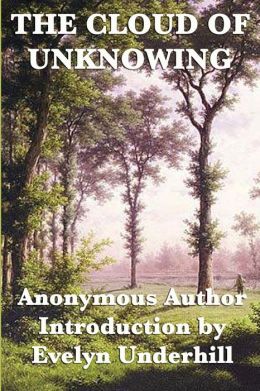
The Cloud of Unknowing (Middle English: The Cloude of Unknowyng) is an anonymous work of Christian mysticism written in Middle English in the latter half of the 14th century. The copy before me is subtitled "A Book of Contemplation the which is called the Cloud of Unknowing, in the which a soul is oned with God." Edited from the British Museum MS. Harl. 674, with an introduction by Evelyn Underhill, 4th edition. It was published in London by John M. Watkins, 1946.

The text, which birthed the idea of 'centering prayer', is a spiritual guide on contemplative prayer in the late Middle Ages. The precise identity of the treatise is unknown, although various individuals were suggested as its author over the years. The debate over who might have penned the original still occupies the academic hunger of many researchers.


The underlying message of this work proposes that the only way to truly "know" God is to abandon all preconceived notions and beliefs or “knowledge” about God. To be courageous enough to surrender your mind and ego to the realm of "unknowingness," at which point, you begin to glimpse the true nature of God.


While some dismissed the work as mere theosis (the entry into deification) or as too similar to transcendental meditation , others focused on its attempt to move the person into a deeper and closer relationship with God.  A mysticism familiar in various periods of Christian history.

8/13/13

The Value of Church History

A Church in Plevna, Ks ca 1920
Many churches are looking at assessment of how well they have done the work of the Gospel.  They have reached a place where they no longer grow and are in decline.  Once vital, active, and focused in their life as a church in their community they have unraveled and questions remain.  A key factor is found in discovering the church history.  When a person goes to a medical doctor they fill out a history form that provides clues to current or future problems.  In the same way, examining the past can provide important information as to what went wrong, when, and what might need to be done in the future to renew, or in some cases, resurrect the church into a vital reproducing centere of spiritual life.

Many denominations have very useful helps for establishing local church archives and keeping the history. The Commission on Archives and History of the UMC published a small booklet just in time for the writing of the 1975 church history.  Significant areas are underscored and the outline of the finished work clearly follows the suggestions of the booklet by Wallace Guy Smeltzer.  

In the introductory remarks he notes: "An accurate, well written history of a local church has real value. It lifts up the achievements, services, and sacrifices of past generations in the church. It inspires pride and loyalty on the part of present church members...It can enhance one's appreciation and love of the church of our Lord which is a "thousand years the same." 

At the time the guide was written the General Conference made the compilation of such a history the responsibility of a local church history committee under the guidance of a local church historian.  The history was to be compiled and then brought up to date each year.

The booklet was divided into subheadings:
First Step
Source Material for the History
Exploring Local Church Sources
Annual Conference and Denominational Sources
Community Sources
Organizing the Material for the History
-Table of contents
-Forward
-Preface by the author or the committee
-Chapter 1 How United Methodism came to (name of community)
-Chapter 2 Our Connectional Relationships
-Chapter 3 The Story of Our Church Property
-Chapter 4 The Story of Our Church Organizations
-Chapter 5  The Record of Our Spiritual Life and Concern
-Chapter 6 The Growth of Our Church and Its Future
-Chapter 7 Our Present Church Organization
-Chapter 8 Our Current Membership Roll
Origin of the Church
-Connectional Relations of the Church
-Church Property
-The Organized Life of the Congregation
-The Spiritual Life of the Church
-The Progress of the Church
-Current Organization
-Membership roll
-Publishing the History

It is interesting to note that in the "Spiritual Life of the Church", the author says "the spiritual vitality of a church is difficult to measure. Some indication of it is provided, however, by evangelistic activities, such as camp meetings in earlier days, revival services, visitation evangelism campaigns, and preparatory class training.  An important indicator is the number of full time Christian workers produced by the church, such as ministers, missionaries, religious education directors or church music leaders....A social conscience of the church can be set forth by recording participation inactions for the causes of temperance, economic justic, civil rights, benevolent controbutions, and charitable relief..."

History, however, is more than mere names, dates and places.  A history should also clearly express the motivations, attitudes, and beliefs of people in a given time or it will be nothing but dry data.  It is the spiritual legacy a church history carries...from generation to generation...telling the marvelous works of God among a people.

For those interested in developing a church archive here are some useful links:
Brunner, Mark.  "Ten Steps in Building a Church Archive." Wisconsin Lutheran Churches.
Gardner, Robert. "How to Start and Maintain a Church Archives".  Southern Baptist.
Bergeron, Jeannette. "Manual for South Carolina Religious Archives and Record Keeping."
Texarkana Museum System. "Guide to Collecting Your Church History". 
United Methodist Archives Center
Insuring the Future of Our Past (some good practical consideration points)

8/12/13

The Method Behind the Means

In 1936, the '2 in 1 Class' (also sometimes the Two in One Class) printed a small booklet of the classConstitution and By-Laws of the Two in One Sunday School School Class of the Wesley M.E. Church, Oklahoma City, Oklahoma. This eight page (6 with text) booklet was approx. 5 inches by 4 inches. It established in Article I the name of the class was to be the "The 2 in 1 Sunday School Class". 


It specified the object or purpose of the class as an organization for the "regular and systematic study of the Bible under competent leadership; the achievement of Christian culture through the spiritual, intellectual, and social development of every member; mutual helpfulness and the extension of Christ's kingdom." The motto for the class was simple and direct: "every member present every Sunday on time with a liberal offering, a studied lesson, and a mind to learn."


The name came from the 'two shall be one' and was made of younger married couples. Some fifty years later they members had aged but the class still met. It finally disbanded in the 1990's. The committee for the booklet was comprised of Virgil A. Alden, H.B. King, and Ellis Margo and the last amended date for this copy was October 30, 1936.

One has to wonder if this type of intentional approach to religious life, merging aspects of both civic awareness of orderly group conduct in a democracy and the Wesleyan model of setting a goal and then meeting that goal through an ongoing process of personal commitment, might not be an important lesson to relearn.  

In the "Me" decade of 'going with the flow' rules, commitment, and accountability fell by the roadside in most of modern society.  That is also a time when churches from many denominations encountered a great 'falling away.'   The WWI and WWII generations in conflict with the Gray Flannel corporate society and their children - who tuned in, turned on and dropped out of nearly everything.  The modern era of social justice replaced sharing the Good News. The social programs replaced the spiritual programs.  Instead of bringing the two together an either/or dichotomy emerged.  The way was lost as the clear purposes, missions, and goals were lost in a forest of conflicting idealogies of equal worth on a stage relative moral direction.

One of the aspects of post-modernism is a return to the origins, to touch once more the source and then make the journey again.  Along the way there is an identification of mistakes and errors in judgement, methodology and practice.  A living form of the old adage "measure twice, cut once."

Maybe it is time to revisit the origins and the source and take measure once more, check the compass and find the true north of spiritual activity and be renewed in mind and functions.

8/9/13

Wesley's Covenant Renewal Prayer


The people called 'methodists' were so labeled due to their belief in approaching the life of faith with a method, a plan, a specific personal goal that reflected the instruction of scripture.


A part of that was an annual 'renewal', what we might call a revival, of this commitment in a prayer used in the litugy.  It was often used at New Year's and is frequently found in churches to this day.  That is very fitting because it was designed to adjust the course, and gracefully urge a return to the true north of relationship and witness for the sake of the Gospel.  It was a reminder to be a people of holy purpose:

I am no longer my own, but thine.
Put me to what thou wilt, rank me with whom thou wilt.
Put me to doing, put me to suffering.
Let me be employed for thee or laid aside for thee,
exalted for thee or brought low for thee.
Let me be full, let me be empty.
Let me have all things, let me have nothing.
I freely and heartily yield all things to thy pleasure and disposal.
And now, O glorious and blessed God, Father, Son and Holy Spirit,
thou art mine, and I am thine.
So be it.
And the covenant which I have made on earth,
let it be ratified in heaven.
Amen.

The Character of a Methodist at UMC Global Ministry.
Some additional resources from Wikipedia:
Image from - From "The Wesleys and Their Times," http://gbgm-umc.org/umhistory/wesley/ , courtesy of the General Board of Global Ministries, The United Methodist Church.

Dr. William Forney Hovis of the Methodist Episcopal Church (1872-1860)

WUMC Archives
William Forney Hovis was born in 1872 in Wesley, Pennsylvania.  He married Aimee Parry in 1902 and pastured in Indiana, Missouri, Wisconsin, Oklahoma, and Minnosota.  He retired in 1938 to devote himself to his writing.  After the death of his first wife he remarried Ina Mosiman and had children Willliam Jr (1914) and Keith (1916). He died in 1960 in Minneapolis, Minnesota.

Hovis published numerous works from an early date in his ministry.  Some titles are:

  • Quality Folks: Practical Meditations (Cincinnati: Jennings and Graham, 1908).
  • My Words: As Reported by Matthew, Mark, Luke, John and Paul. (Cincinnati: Jennings and Graham, 1911).
  • Heart Sonnets. (Boston: R.G. Badger, The Gorham Press, 1913).
  • Poetic Sermons. (NY: Revell, 1932).
  • Consolation. (Indianapolis: Cornelius, 1935).
  • Sin and Salvation: A Study in Origins. (Nashville: Tidings, 1954).
  • A periodical in the 1930's called, The Reveille.
He served as the pastor of Wesley Methodist Church 1925-1928 during a crucial building program that added educational space and a new sanctuary.
Wesley Methodist Church, ca 1930