3/10/13

Book By Damon Burrows Reissued


This insightful, practical, and purposeful book, PEOPLE ARE FOR CARING,  originally appeared in 1980.  The author, Damon Burrows, was a man who believed much in the concept behind the title.  His faith was such that he never saw strangers but only potential members of the family of God.  The original description from the book says it all :

"Damon Burrows Is a person-who cares about people. In his individual and group experiences, he has developed a series of practical exercises that teach - "Caring is being like Jesus."

Reverend Burrows is now Evangelism Consultant for the General Department of Evangelism in the Pentecostal Holiness Church. He has been trained to develop specific church growth ministries which has involved over 100 lectures on his "Clinic on Church Healing."

A native of Oklahoma, Damon Burrows has served as an evangelist and pastor for ten years. He is a graduate of Southwestern College in Oklahoma City and has done graduate work at the Nazarene Theological Seminary and Midwestern Theological Seminary in Kansas City. He was a personnel man in the United States Navy for four years which began his 15 years of experience in counseling."

Rev. Burrows went to join his heavenly friends early in 2013.  Urged by many family and friends his family, wife. Marilyn and their two sons, Damon II and David, have reissued this timely and timeless work to continue to bless and inspire others.  To continue the objective made clear through Damon Burrows' life, people are for caring.  It is a splendid book to add to collections of people based outreach, ministry, evangelism, Pentecostal authors, and related subject areas. 

To order click here.

2/23/13

DAMON O. BURROWS (July 2, 1941 - February 23, 2013)

A moment of editorial liberty. For additional information about this Pentecostal Holiness minister click here.

ca. 1985
Damon O. Burrows, minister, evangelist, administor, husband, father, and friend, left this world today to go to a better place and join the many people he cared for, loved, witnessed to, and helped through his years of ministry and leadership.  A Navy veteran, Damon never met a stranger.  He was a friendly, outgoing, and genuinely warm individual whose heart was easily touched and his actions often motivated to act as his Lord would have wanted him to act. 

His heart was always to evangelize, to share the message of Christ, and to bring the joy he experienced to everyone.  He ministered to the homeless, the drunk on the street, the addict, the gang member, the criminal, the lost, the hurting, the young, the old, and the in-betweens.  To Damon there were but two types of people - those who knew the Lord and those who did not.  Anything else was window dressing to that basic concern.   He mingled with CEO's, high ranking individuals, weathly men and women.  He rubbed shoulders with the street person with equal ease and equal love. 

God led him to often make the connections between those in need and those able to help with that need. A matchmaker of miracles he stepped in to help like he knew his Master would have: food, help with bills, prayer, a ride, advice, wisdom, and laughter, always laughter.

His life was a role model of the impact of the love of God on people.  People were always his chief concern, his motivation in life, and his reward.  No one who ever knew Damon O. Burrows can ever forget him and the world is poorer today with his passing.  Those who knew him, however, are enriched.  Like the wake of a might ship on the seas, he leaves a powerful legacy of grace, love, and joy.    For him the words of the sailor's prayer are apt "...  Then are they glad because they are at rest; and so he bringeth them unto the haven where they would be."

Fair seas in heaven, my friend, fair seas. 

1/7/13

An Annotated Bibliography (In Process)


IPHC Books
Classics from Pentecostal Holiness Pens:  A Brief Annotated Bibliography of Significant Early IPHC Works.
[A WORK IN PROGRESS]

Compiled by Marilyn A. Hudson, MLIS (2008)

Most of the early works of the IPHC can be divided into clear classifications of history, sermons, and doctrinal issues (usually an apologetic for the Pentecostal experience of speaking in tongues).

1898-1946

Joseph Campbell in the first book of IPHC history lists several authors and their works in chapter 11, “Books, Booklets, Tracts and Pamphlets in the Pentecostal Holiness Church”. The works covered there were from 1898 to 1946.

Authors listed by Campbell are G.F. Taylor, J.H. King, G.H. Montgomery, Hubert T. Spence, A.E. Robinson, Dan T. Muse, D.D. Freeman, John W. Warren, J.W. Kelley, May Gould Johnson, N.J. Holmes, F.M. Britton, W.M. Hayes, Paul F. Beacham, Mrs. K.E.M. Spooner, Oral Roberts, W.H. Turner, Sarah Nell Beacham, and Joe E. Campbell.

Although an official publishing house had been established in the IPHC in 1918 in Franklin Springs, Georgia, many of the authors published under other companies or self-published using the Franklin Springs facility as press. For that reason, not all the books here carry the "Pentecostal Holiness Publishing House", “Advocate Press” or other label. In this work, the focus will be on books ranging from the 25 page booklet to more significant lengths.

1947-1970

Updating this list for the time period 1947 to 1970 would add  the names of : R.O. Corvin, Blanche King, O.T. Spence, Margaret Muse Oden, Oscar Moore, Charlene West, Florence Hamilton, Noel Brooks,

1970-2010

After 1970 the number of titles of books written by IPHC people would expand. For the time 1970- 2000 titles would include: Frank Tunstall, Noel Brooks, B.E. Underwood, Vinson Synan, J.A. Synan, J.F. Williams, Garnet Pike, Terry Tramel, Robert Rex, Welch, and others

_________________________________________________________________
1. Britton, F.M. Pentecostal Truths. Royston, GA: Pentecostal Holiness Publishing House, 1919. F. Marion Britton was born Jan 21, 1870, five miles below the Indian –Town Presbyterian Church, South Carolina. He was converted at 18 and joined the M.E. Church and began preaching holiness until church rules forbid itinerant evangelistic preaching without permissions. A stay with a local Baptist group was short lived but an encounter with the Fire Baptized Holiness Church proved a better fit. He received the Baptism of the Spirit with initial evidence of speaking in other tongues and on Feb. 7, 1907. He would soon join with the merged FBHC and the PHC. He and his wife were staunch believers in diving healing and rejected the use of drugs. Britton reported a son had died and been returned to life through prayer. She prophesied in church that she would be ‘with Jesus before the next Christmas’ and died in 1903 ‘without drugs.’ Content of the book reveals the issues and questions of early Pentecostal Holiness people: Salvation through the blood; Justification , the birth of the spirit; Is there sin in believers?; Wesley and the Second blessing; Our kind of holiness; Were old testament saints sanctified?; The decision or choice of Moses; Enduement of Power(sic); Sanctification , a second work of grace; Healing as in the atonement; Holiness; Pentecost to the Gentiles; Christian graces; A picture of the last days; the indwelling spirit; The Holy Spirit a person; Ephesian Pentecost; Samaritan Pentecost; The book of 1 Corinthians and out doctrine; Marriage relation and against divorce and remarriage; Prodigal son; A sermon on the resurrection; A brief sketch of my life.


2. Taylor, G.F. The Rainbow. Franklin Springs, GA: Advocate Press, 1924. 223pg.Taylor (1881-1934) had written a small book in 1907, The Spirit and the Bride, and in 1916 a well-received book, The Bride of Christ and followed up the prophetic theme with this work in 1924. In this work he pulled three chapters from the earlier works as he once more explored the concept of the Second Coming of Jesus Christ. Basing the title on the Covenant of Noah he uses the rainbow as a theme that arcs across the book from start to finish. In chapter 1, he presents the rainbow as covenant token and understands the colors may be lessons in themselves of God’s love; it is “prophetic” and “symbolic of God’s glory.” As such, the red symbolizes the blood of Christ, orange the fruit of the spirit, yellow is for the gold of divinity, green is the color of “better things ahead”, blue brings the eyes toward heaven and the promises found there, indigo represents the ongoing cycle of the harvest (spiritual and metaphoric), and finally the violet which he equates with the love of God. Included in the book are discussions and comparisons of pre and post millennialism, the restoration of the Jews, the role of the Jews in the Kingdom, wisdom, antichrists, the role of the Bride of Christ, and many other prophetic themes. George F. Taylor was “editor, author, and agent of religious literature” and was an early leader in the IPHC and was significant in the founding of an early college and the publishing house, both in Franklin Springs, Georgia .


3. Montgomery, G.H. Steps to the Upper Room. Franklin Springs: Publishing House of the Pentecostal Holiness Church, n.d.


4. Spence, Hubert T. The Person, work and witness of the Holy Spirit. Franklin Springs, Ga: Pentecostal Holiness Publishing House, 1944. Spence addressed a dearth in literature by addressing the nature of the Holy Spirit in practical lectures designed for the average person in the church. Spence was born August 27, 1898 in Harnett Co., NC. He was converted in 1920 and received ‘the blessed baptism with the holy spirit” Feb. 17, 1921. His interest in the Holy Spirit as a theological issue arose as he was doing special studies at Union Theological Seminary in 1934. This work contains a set of lessons designed to provide instruction for a solid biblical foundation of understanding about the work and nature of the Holy Spirit. It was also an early and very direct apologetic training manual on behalf of the Pentecostal experience. Included were insightful and thought provoking lesson questions and a unique set of questions “For Our Opponents”. An example is the keenly phrased “if the spiritual gifts and supernatural signs of the first century are not intended for the church of today, when and by whom were they revoked? Give at least one scripture.” The content for this collection of studies: The Holy Spirit a person ; The Holy Spirit, His age in particular; The General work of the Holy Spirit; Work of the Holy Spirit in Particular; Work of the Holy spirit in the church; His personal witness; The Pentecostal witness.


5. Brooks, Noel. Scriptural Holiness. Advocate Press, 1967. 70p. Rooted in the Holiness Movement, the IPHC treasured the teachings of Biblical and cultural holiness as it grew in the post Azusa Street years. Pentecostalism was a global event being experienced in Europe, South America, and Australia from an early day. So in 1954 when Noel Brooks (1914-2007), pastor, scholar, biographer and campaign manager of the early revivalist George Jeffreys, joined the IPHC, an author of academic depth and spirituality enriched the denomination. The book emerged from lectures in the King Memorial Lecture series at Emmanuel. The contents of the lectures addressed: Holiness in the Progress of Revelations -1(Old Testament), Holiness in the Progress of Revelation – II (New Testament), Holiness in the Order of Salvation – I (Sanctification as Process), and Holiness in the Order of Salvation - II (Sanctification as Crisis). Brooks notes in his travel he had seen a great hunger for understanding scriptural holiness and the need for people to move more confidently into that level of devotion to God, yet he also was aware that there are both positive and negative aspects to the search for holiness (legalism and works). Brooks skillfully leads the reader through the Bible to uncover the logical and scriptural holiness that God wants us to live for God. “Our time, our strength, our money, our possessions, our all, continually used up in the service of the Lord” (pg. 67), that, for Noel Brooks encapsulated the purpose and meaning of true “Scriptural Holiness.”


6. Campbell, Joe E. The Pentecostal Holiness Church, 1898-1948: Its backgrounds and history. Franklin Springs: Pentecostal Holiness Publishing House, 1951. Until the publication of this work, the only history of the denomination has been in isolated articles in the national publication, The Advocate, or isolated early works by pioneer preachers. Written as part of his academic work, the book’s purpose was to present ‘complete background material which adequately explains the existence of this organization, also the existence of other kindred Pentecostal and Holiness groups, as an essential and integral part of the local church set-up’. In 573 pages the work does just that as the work is divided into major sections: Divisive Forces Giving Rise to New Sects, The Evolution of Denominations; The Formal History of the P.H.C., Background and early beginnings (this section provides crucial information gained from many of those involved in the early birth of the movement and the denomination), Organized Efforts and Expansion, Departmental Developments, History of Education and Publications. Numerous sub-divisions provide history, context, and a good level of detail. No study of the Pentecostal Holiness Church, or Pentecostalism in general, would be complete without a reading of this significant church history.


7. King, J.H. Passover to Pentecost. Franklin Springs, Ga: Pentecostal Holiness Church Publishing, 19 11, 1914, 1955. 208pg. The beloved first Bishop of the IPHC was a man well regarded for his blend of deep spirituality and profound study. He had left the Methodist Church first due to his commitment to the Holiness doctrine being preached in the late 1800’s. He then moved into Pentecostalism with the same balance of mind and heart and under his capable leadership the denomination emerged as a solid and balanced group. In this foundational work of the IPHC, it is required of all new ministers, King argues the case for a clearly seen line connecting the feast of Pentecost to the descent of the Holy Ghost in Jerusalem.


8. Wicks, Mildred. I Knocked – and the door opened unto me. Newman, Ga: 1940.


9. Turner, W.H. Pioneering in China. 1928.


10. Muse, Dan T. The Song of Songs. Advocate Press,1947. 231pg. Dan T. Muse (1882-1949) was a beloved bishop of the IPHC and one of the first significant leaders to emerge in “the west” in the southern based denomination. A man noted for his humility and gentle spirit, he rose to the rank of Bishop in the church and held a passion of missional work. In the 1920’s he pastored the First Pentecostal Holiness Church of Oklahoma City (a church that had begun as a mission in an old saloon) and quickly grew to become a significant church in the region.  Muse called the Old Testament book, The Song of Solomon, one of the “most sublime love stories ever written.” Although some over church history questioned the presence of such a frank and sensual book in scripture, Muse approached it as a ‘distinctively “latter day book”’ that used allegory and symbol to portray the ‘Heavenly Bridegroom’ and the Bride of Christ. The book is thus interpreted, in the words of C.H. Williams in the introduction, as the “preparation necessary for Christians to…be caught away with Him in the pre-tribulation Rapture…”

Presenting the book in a question and answer manner, Muse, explores key texts and then expands on them, utilizing his vast experiences as pastor, denominational leader, and spirit-filled Christian. The book is enriched by an almost poetic level of description as the author discusses the imagery of the text in light of the nature of the relationship of the Church to Jesus Christ. In many ways the work is infused with one man’s deep love for his Lord. Saturating every page is a reflection of the same eagerness and joy found in the Biblical text. When he ends the book quoting, “Make haste, my beloved,” the reader can sense the soul of a man whispering his dearest and most cherished hope.


For further reading on Bishop Muse see Harold Paul’s From Printer’s Devil to Bishop. Advocate Press, 1976.


11. Underwood, B.T. Gifts of the Spirit. Advocate Press, 1967. Despite the long emphasis in the denomination on the work of the Holy Spirit little had been placed in book form that sought to provide teaching until this small volume appeared.

12. Beacham, Paul F. Meat in due season. Advocate Press, 1954.

13. Roberts, Oral. Healing Waters (serial), 1950.

14. Underwood, B.T. The Spirit’s Sword. Advocate Press, 1969.

15. Robinson, A.E. A Layman and the Book. Washington, 1950. 153 pg. This book by Canadian Robinson (1877-1950) with its emphasis on communicating the meaning of the Bible to the person on the pew, was a rare work in its day and in many ways stands the test of time in its sensible, balanced approach.


16. Stewart, Leon.  Too Late!  [                       ]. This work is considered the first fiction work produced within the Pentecostal Holiness Church.  It covers a fictionalized story of the Rapture.


Resources:

Campell

Synan

12/23/12

CAMPMEETING

Kansas Campmeeting, ca 1968
Dennis Terry, Linda Weaver Terry.
Marilyn Terry Hudson
Camp meetings were a regular feature of many evangelical groups in the 19th and 20th century.  They began as evangelistic tools designed to bring people to a personal relationship with God.   Over the years they evolved and changed to suit the diverse groups found various corners of the world.

In looking at the North American experiences it is clear they adapted to the needs of several branches of Protestant Christianity.  In some traditions these meetings were along the lines of Bible institutes or teaching conferences with worship services highlighted by choirs and congregational singing.  They were often held in the retreats, resorts, and mountain or seaside centers of  New England.  Bible teachers from colleges, the great evangelists of the day, and the musicians of note were on hand. In other traditions, especially in the south and the west,  they were often fashioned along the line of a long series of lively revivals designed to insure salvation and inculcate a desire for more intense holy living. 

Some groups seemed to have equated rough conditions with more spirituality.  The comfortable pews of their home churches forgotten in the endurance of rough board seats.  The conditioned air, or even fanned air, was eschewed in favor of the open air (even in mid summer as temperatures soared into three digits).  The old brush arbor of 19th century meetings may have given way to a more solid roof and strong stable beams, but the saw dust was still there on the ground and the sides open to the wind, as well as the bugs and the rain.


Methodist Meeting ca 1811
In many ways these meetings were along the lines of a religious vacation. This in no way diminishes the spiritual aspect of the event but enhanced it. For rural people isolation was a normative aspect of their and getting together at sales and harvest events looked forward to by all.  This same isolation could be found among many evangelical, holiness, and Pentecostal groups as they spurned "worldly things" but may have also been spurned due to their race, poverty, education level, or culture. 

The camp meeting combined strong spiritual purpose with the opportunity to feel a little less isolated. Where instead of seeking out spiritually worldly entertainments (often forbidden to many adherents of these protestant groups) the people could enjoy safe social interactions, experience fellowship,  hear news of distant places and find temporary diversions from their normal working and religious life.  This served to provide a recreational element needed while supporting the moral values of the religious groups.  

For some traditions not having educational requirements, camp meetings became a place for the pastors and teachers to hear quality preaching, learn new things, and gain better - and more correct or orthodox - understanding of their movement's underlying theology.

Keith Drury has identified several reasons for the demise of the camp meeting. He cites larger churches, loss of  professional evangelists, greater difficulty of people to get away for the traditional week, increased government regulations, improved social standing among evangelical, holiness, and Pentecostal groups, but also some more theological issues, such as a diminished emphasis on "crisis theology":  "Camp meetings have always been about going to the altar, making a decision. Camp meetings were first about "getting saved" and later about "getting sanctified" or some combination of both crisis experiences. As more and more holiness people and pastors adopted a more gradual approach to both sanctification and conversion, the need for the higher pressure hard-sell altar call of the camp meeting diminished."  

This he couples with a "Lack of spiritual hunger":    "Do you know a lot of people so spiritually hungry that they will take their vacation from work and go stay at a camp meeting to hear preaching and teaching three times a day for two weeks straight? My granddad did. And he did it before he was saved! I don't see that much hunger around today. I see some short bursts of temporary hunger maybe for some fast-food spirituality. But not much hunger for a two-week banquet. Camp meetings fight this lack now more than ever. A good swimming pool might help, but... preaching?"

The camp meeting served a purpose as evangelistic tool, to bring spiritual community and fellowship,  to share quality preaching and teaching, and serve as a time of spiritual refreshment.  Many memories were made and the next season was eagerly looked for.  Times may change, people may change, but basic needs of evangelism, hearing the word, and finding new spiritual energy all remain.  It is hoped that present models serve their generation as well as the camp meeting served the needs of previous generations.

11/27/12

The Authors of Mosaic Address Varied Topics

Mosaic: Papers in Honor of Noel Brooks (2012) features the academic and creative efforts of several individuals.  "Mosaic" is a collection of scholarly papers on a variety of topics in honor of a British born Wesleyan Pentecostal pastor, church leader, scholar, educator, and author. Brooks was deeply committed to the merging of faith and intellect and the role of scholarship in the  life of the person of faith. This collection honors that by setting in place a few modest pieces of what is hoped will be a larger work uniting many in common purpose. Authors submitted for inclusion in this volume include Dr. Chris Green (Pentecostal Theological Seminary); Professor Rev. Ken L. Young (Southwestern Christian University); Dr. Marvin J. Hudson, Pastor and Intensive Interim Ministry Specialist; Mrs. Irene Belyeu, Author (B.A.); Mrs. Marilyn A. Hudson, Author/Speaker (M.L.I.S.). This project was sponsored by The Friends of Noel Brooks.


Dr. Chris Green is on faculty at The Pentecostal Seminary in Kentucky. He is author of the book Toward a Pentecostal Theology of the Lord's Supper: Foretasting the Kingdom.  Dr Chris Green, is currently serving as Assistant Professor of Theology at Pentecostal Theological Seminary in Cleveland, TN. Previously, he taught at Oral Roberts University in Tulsa, and Southwestern Christian University in Bethany, OK, while holding adjunct positions at other schools in the Oklahoma City area. Dr Green and his wife, Julie, helped plant and pastor a church in Northwest Oklahoma City, in 2003. After stepping down from that role, they moved to Cleveland, TN to teach at the Seminary. Dr. Green completed his PhD in theology (Bangor University, Wales) and previously received a Doctorate of Ministry (D.Min.) from ORU. He also has a Master's degree in theology, and Church Leadership. They have two kids: Zoe, 7, and Clive, 4. He is author of Toward a Pentecostal Theology of the Lord's Supper: Foretasting the Kingdom (2012).  He addresses "In Word and Spirit: Critical and constructive  reflections on the theological method of Noel Brooks."


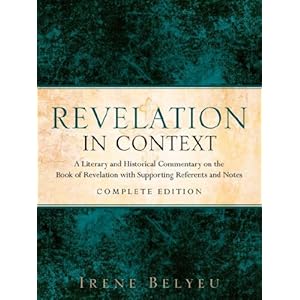
Irene Belyeu is author of Revelation in Context. In 1929, Irene Barbara Parris was born into a loving family near Shawnee, Oklahoma. Irene spent her childhood working in the fields and woods and walking to school and to church. She reveled in the beauty of nature in the earth and the sky. In 1950, she was married to Darrell Belyeu and had six children. Irene began an intensive study of the Book of Revelation to answer her children’s questions as well as her own. At the age of fifty-six, she completed a Bachelor of Arts degree in linguistics from the University of Oklahoma and was elected to Phi Beta Kappa. A volunteer tour with the Wycliffe Bible Translators gave her insight into translation and literacy. She applied her linguistic training to research on the Book of Revelation and, as a result, has published, Revelation in Context (2012). Her sermons are available at www.sermon.net/revelationincontext.  Belyeu explores the role of signs and wonders in "By Faith We Understand."


Rev. Kenneth L. Young is a Professor of Bible and Theology at Southwestern Christian University in Bethany, Oklahoma. He served also for fourteen years as the Dean of Adult Studies. Ken represents a fourth generation Pentecostal Holiness heritage. His father, maternal grandfather and great grandfather were ministers in the Pentecostal Holiness movement.  Ken holds ministerial credentials through the Upper South Carolina Conference of the International Pentecostal Holiness Church. Ken pastored two churches in South Carolina for a total of eight years while serving on the Conference World Missions Board and the Conference Evangelism Board.  He is currently a candidate for the Doctor of Theology. Young explores evangelism and missions in "Investing in the City" and "Analysis of Pentecostal Mission Strategy."


Dr. Marvin J. Hudson, ordained minister, holds the D.Min. from Asbury Theological Seminary and the Master of Arts from Southern Nazarene University and a Master of Divinity from Phillips Theological Seminary.  He is certified as an Intentional Interim Ministry Specialist. He has taught Biblical languages, Theology, Biblical studies, and Leadership in several institutions.  He is a member of the Society of Biblical Literature and the South Central Classics Association.  He examines the nature of spiritual gifts and ministry in "Ta Charismata Ta Meidzona."


Marilyn A. Hudson  is a professional in the fields of history, library and information having received degrees from the University of Oklahoma. Additionally she is an author, educator, professional storyteller, workshop leader and speaker. Her published works include Those Pesky Verses of Paul (2011) and Noel Brooks: a Life Shining and Burning (2011). She is a member of the Association of College and Research Libraries, the South Central Classics Association, and the Oklahoma Library Association.  She addresses "Prophetic Women" and "Publishing the Word-Shaping the Message: A Survey of publishing influences in one Pentecostal denomination, 1955 and 1965."


The book will soon be available in Kindle ebook format.

10/13/12

PAPERS IN HONOR OF NOEL BROOKS


A mosaic is a design created by many smaller pieces all uniting  in common purpose to convey the artistic image of the creator.  Only as one steps back to see the whole design does the meaning become clear.


"Mosaic"  is a collection of scholarly papers on a variety of topics in honor of a British born Wesleyan Pentecostal pastor, church leader, scholar, educator, and author.   Brooks was deeply committed to the merging of faith and intellect.  This collection honors that  by setting in place a few modest pieces of what is hoped will be a larger work uniting many in common purpose.  


Authors selected for inclusion in this volume include Dr. Chris Green (Pentecostal Theological Seminary); Professor Rev. Ken L. Young (Southwestern Christian University);  Dr. Marvin J. Hudson, Pastor and Intensive Interim Ministry Specialist; Mrs. Irene Belyeu, Author (B.A.); Mrs. Marilyn A. Hudson, Author (M.L.I.S.).

This project is sponsored by The Friends of Noel Brooks. All proceeds go to charity and may be ordered here.

9/21/12

IPHC BISHOP CARPENTER PASSES AWAY

IPHC Bishop Ron Carpenter Sr. stepped down from his role as general leader of the IPHC this last summer due to complications from cancer.   He passed away late Sept. 20, 2012 in South Carolina.  Read more about this leader and view a tribute video here.

Recognized as a skilled leader, academic, and visionary he was also known for his extreme kindness, courtesy, and passion.  He held an abiding devotion for the cause of his denomination, and for the Pentecostal-Charismatic Movements, but more importantly for his Christ.

9/11/12

“REPORT ACCEPTED AND CHARACTER PASSED”

Some Ordained and Licensed Women from the years 1929 - 1939  in the Kansas and Oklahoma Conferences  of the Pentecostal Holiness Church.
 
Compiled By
 Marilyn A. Hudson, with Alicia Hutson ,  April 2006
 
The year was 1965 in Wellington, Kansas, in the home of the pastor of the local Pentecostal Holiness Church.  The guest evangelist, Mary E. Ford, was a woman just easing out of middle age wearing a cream colored chiffon blouse, a sturdy brown woolen skirt, with fading hair escaping from its once tidy bun.  Her wide pleasant face was a roller coaster of expressions from intense concentration to hearty laughter. 
 
Sitting at the parsonage piano, a sturdy black upright, she is surrounded by the daughters of the pastor and a friend of theirs who often came to visit.  The visitor entertains them playing snappy standards from the forties and crooning tunes from the fifties.  She responded to the news that the oldest girl was taking business courses by encouraging her to keep her chin up and not let the men bully her.  She recounted with great hilarity a time when an employer had tried to bull her and all laughed at the impossibility the image presented. 
 
To all of those gathered around the piano that afternoon she shared her love of God, her courage, her experience, and her sense of fun.  To each and every one there she encouraged them to “press on” in their faith and to get a good education[1].
“Report Accepted....Character Passed....”
The Holiness and Pentecostal movements were unique episodes of American religious history but shared a common thread in a willingness to accept women as instruments of ministry[2].  From the earliest days in both movements women responded to God with a desire to preach the gospel with as much enthusiasm as their male counterparts. As some elements of both merged to form the Pentecostal movement, the invigorating dynamic of a life that sought to live in the fullest relationship with God was not one that would accept limitations easily.[3]
An examination of the official registers of membership for the Oklahoma and Kansas Conferences of the Pentecostal Holiness Church for the years 1929-1939 reveals some interesting insights, identifies some pioneer women, and provides a context for further discussion about the historic role of women within the Pentecostal tradition.
The title stems from a reoccurring statement recorded in the 1929 year book.  As the conference business would progress the ministers present would offer their reports (how many sermons preached, miles traveled, etc.) and at the conclusion there would be a motion of “report accepted and character passed.”    It is a fitting testimony to the role of these women and their unique place in the history of the American church and the Pentecostal tradition that without question each one was accepted.
Description of the Project
A brief survey of records contained in the “Year Book of the Pentecostal Holiness Churchfor the years 1929 to 1939 was conducted.  Names of obviously female ordained and licensed women were recorded and their number compared with the total list of individuals.  One limitation may be that some additional persons on the lists may also be female and the use of initials in their names may conceal that fact. Also, there is margin of error because of a few names that can be either a man or a woman’s name and some women did marry changing their name.  However, women, according to the most common format employed, were most often listed with the title of “Mrs.” followed by their husband’s name, or their first names if a young woman or “spinster”.   The scope of this study was to collect numbers of active female ministers, compile a list of names,  and identify early women ministers, so no attempt has been made to gain broad or detailed biographical information on all of them.
History
The Pentecostal movement of the 20th century is generally considered to have  begun in1901.  Agnes Ozman is believed to be the first person to receive the baptism of the Holy Spirit with the evidence of speaking in tongues. She was a student in Charles Parham’s school in Topeka, Kansas in January of 1901.  An African-American student there, William Seymour carried the message west to Los Angeles and from a mission located on Azusa Street the experience  spread across the country.
From its inception the movement seemed to epitomize an equality of persons that was unique for the time period.  Service to God and blessings of the Holy Spirit (“the anointing”) became the litmus test of value over issues of gender or even race.[4]  
Pauline writings that for the Christian community existing as one in Christ there was to be no longer “male or female” or “slave and free” (Galatians 3: 28-29), now took on liberating meanings as leadership in the new Pentecostal movement featured both women and persons of color.[5]   The dynamic nature of the experience, and the resulting sense of urgency in proclaiming the gospel, convinced many that indeed the time of the Biblical “latter rains” had come.  Citing the prophet Joel in the Old Testament , “Then afterward I will pour out my spirit on all flesh, your sons and daughters will prophesy...” (Joel 2:29-32), few in the movement felt they could place limitations on who ministered.[6]
Ordained and Licensed Women, Kansas and Oklahoma, 1929 and 1939.[7]
The following women were identified from the rolls of those who served as formally recognized ministers.  With some exceptions, most had been admitted to the conference within the same decade.   Most were assigned a local church; some assisted their husbands in the work, while some served as evangelists. On a administrative level, although they were frequently serving on conference committees of the more traditional women’s areas such as “Memoirs” ( a record of those who had died the preceding year) and “Public Morals”, they were also in leadership roles dealing with issues of publication, missions, and resolutions (i.e., 1939 in Kansas Mary E. Ford served on the Committee on Resolutions and later would be conference secretary-treasurer[8]). Some would in coming years be in key leadership roles on state levels and at least one went on to be published in the national publication, The Pentecostal Holiness Advocate.[9]
Attempts to identify the earliest women licensed or ordained in these regions is challenging due to the fact that the records from that time period are incomplete or are not clear as to gender.   From information located, however, there are several women who were ordained within a few years of Oklahoma’s 1907 statehood.  Mrs. Dolly York of Oklahoma was admitted to the ministry roll of the Oklahoma Conference in 1910 and Willa J. Short in 1911.  In the Kansas Conference Annie E. Carmack was admitted in 1913.  The earliest male counterpart was O.C. Wilkins  admitted in 1910. [10]

Kansas (24):

Barnes, Emma

Beal, Estella

Brownback, Nellie

Carmack, Annie E.

Downing, Annie M.

Filbert, Estella

Eslin, Lavonia

Ford, Mary E.

Hall, Alline

Hill, Edith

Hoel, Olive

Kaminska, Lucinda

Orr, Lizzie

Pinkston, Mrs. J.P.

Roth, Berthe

Shannon, Mary Katherine Butterfield Davis (1916)[11]

Shively, Ora B.

Spotts, Ruby

Sprogue, Mrs. E.H.

Thiele, Hellen

Taylor, Beulah

Trader, Marietta

Ward, Linna (later Rogers)

Wassom, Della

Wedeking, Nettie

Oklahoma (107):

Adair, Gertrude

Allen, Reba

Anderson, Mrs Lillian

Atchley, Mrs. Sarah

Barger, Rosa (1927)

Beall, Estella

Bell, Eva

Bennett, Maggie

Bland or Blond, Vella Cleta

Booking, Viola

Brandstandt, Mrs. N.C

Brooks, Mrs. Eva.

Brown, Irene

Buchanan, Stella

Bullard, Beulah

Byus, Hazel

Campbell, Mrs. J.A. (1913)

Caldwell, Juanita

Carlton, Bell

Carmack, Annie

Carter, Carrie

Chilcoat,Fae or Eula

Clarke, Neva (1925)

Classen, Clara

Coley, Beatrice

Cooper, Nora

Cothran, Mrs. L.V.

Darrow, Mrs. C.L. (Smith)

Dooley, Mrs. Ed

Fowler, Mrs. S.S.

Frantz, Edna

Gaither, Mrs. S.E.

Glenn, Evelyn

Haley, Inez

Hallam, Mrs. Urchie

Hamilton, Naomi

Hampton, Mrs.  H.W.

Hatfield,  Mittie

Hargis, Lucile

Hill, Mrs. O.M.

Hope, Grace

Housdon, Minnie

Hurt, Mrs. Margarett

Hutto, Amana

Iley, Mrs. J.H.

Isbell, Mrs. Ruth

Jones, Margaret (1925)

Keener, Mrs. Lillie

King, Sadie

Landers, Essie D. (1926)

Laymon, Elsie

Lily, Mrs. L.V.

Little, Mrs. N.W.

Kern, Anna

Manning, Opal V.

Martin, Mrs. L.B. (1929)

McCully, Gladys

McGraw, Mrs. D.

Meeks, Mrytle

Mitchusson, Minnie

Moore, Ruth

Moore, Vestal

Muse, Mrs. Dan T.

Nance, Bertha

Pierce, Mrs. Idell

Peters, Mrs. L.A. (1919)

Pinkston, Mrs. Anna

Pool, Mrs. T.W.

Poteet, Vera

Price, Miss Chessie

Revell, Mrs. Emma

Roberson or Robertson, Mrs. J.W.     

Roberts, Pearl Mrs.

Rooms, Mrs. Myrtle

Rose, Martha

Ross, Mrs. Melvin

Scaggs, Chessie

Schockly, Mrs. Tinnie

Short, Willa

Smith, Mrs. C.L.(Maggie?) (1913)

Sparks, Mrs. E. W.

Spence, Mrs. H.N.

Stamphill, Myrtle

Stone, Myrtle

Steele, Edith

Stephens, Viola 

Stratton, Laura

Sutton, Anna

Taylor, Emma

Taylor, Ellen

Thornton, Margaret 

Townsend, Elsie

VanBrunt, Mrs. Dorothy

Varec, Iva

Wassom, Mrs. Della

Watt, Linnie

Weaver, Mrs. C.M (1929)

Wedel, Ello Lous

Wicks, Mildred

Wilbourn, Leeta

Williams, Mrs. W.A. (1913)

Wilkerson, Lucy.

Wilson, Clara (1929)

Wilson, Alice

Wilson, Mollie (1925)

Wright, Mrs. L.E.

York, Dolly (1910)

York, Mrs. W.C.

Summary
A survey of the conference rolls for the regions of Oklahoma and Kansas for the years 1929 to 1939 reveal that women played a significant role and were a definitive presence. The number of women who were formally recognized as being ordained, licensed or doing the work of an evangelist is impressive considering the overall size of the regions they served. The women who were leaders in ministry at an early time period in the conferences of Oklahoma and Kansas are identified adding to the rich history emerging of women in the Pentecostal movement.
The survey also raises many questions worthy of additional consideration and research.  For example, how does the central region compare to the more populated areas of the south, home base of the Pentecostal Holiness Church, at the same time?  How consistent are the percentages of women to men in successive decades, and if there is a decline can a cause be identified?[12] Who were the earliest women in the denomination as a whole to be recognized as clergy?   How were women “called” to service in the early days and in what ways did their fellow ministers mentor them?  What impact, if any, did the formation of the national “Women’s Auxiliary” in the nineteen forties and the latter “Women’s Ministries” have on the number of women going into ministry?  What were the nature and content of their sermons? And finally, how successful were they in what they did?

[1]  The first pastor of the author was the Rev. Sallie Mae Flippin, Wellington Pentecostal Holiness Church, Kansas (1960). Her second  pastors were  Evelyn and Bill Thompson,  Wellington.  As a teenager she had the opportunity to spend time with Mary E. Ford (who is listed in the study) when she was a guest in the home of the Rev. Hoyle Baker.
[2]Lee, Joyce and Glenn Gohr.  Women in the Pentecostal Movement” Women in Ministry, Assembly of God U.S.A. accessed at http://womeninministry.ag.org/history/index.cfm on 4/18/2006. Provides a good chronology of notable women leaders and photos of many of them.
[3]Benvenuti, Sheri R. “Pentecostal Women in Ministry: Where Do We Go From Here?Cyberjournal for Pentecostal Charsimatic Research. Accessed at http:www.pctii.org/cyberj/cyberj1/ben.html on 4/18/2006.
[4]Blumhofer, Edith, The Assemblies of God: A Popular History (Springfield: Gospel Publishing House, 1985) 137.
[5] Hudson, Marilyn A., “In Christ: An Exploration of the Egalitarianism of Galations”, unpublished paper, Southwestern College of Christian Ministries, 1989.
[6]Charles H. Barfoot and Gerald T. Sheppard, “Prophetic vs. Priestly Religion: The Changing Role of Women Clergy in Classical Pentecostal Churches, “ Review of Religious Research, 22:1 (September)4.
[7] Year Book of the Annual Conferences of the Pentecostal Holiness Church; Also Missionary Facts and Figures, 1929.  Franklin Springs, Georgia: Publishing House of the P.H.C.; Year Book of the Pentecostal Holiness Church, 1939. Franklin Springs, Georgia: Publishing House of the Pentecostal Holiness Church.
[8] Pentecostal Holiness Advocate, Sept, 12, 1946, cover photo shows her with a group of Kansas Conference leaders hading a check to Oral Roberts for new Southwestern School in Oklahoma.
[9] Wilson, Alice. “The Lion, The Greyhound and the He-goat”, The Pentecostal Holiness Advocate, (Feb.1, 1945) 5.    She is listed as an evangelist of the Oklahoma Conference.; also Feb.22, 1945, a poem “As Soon As Funds Are Available”, pg. 3                                           
[10] Year Book of the Annual Conference..., the 1930 issue reads for O.C. Wilkins  “1909", but the next and all subsequent years read “1910".
[11] “Sister A.I. Shannon, Pioneer Holiness Preacher Passes”, East Oklahoma Conference News, ( March 1944) 8 and the  Kansas register in the Minutes of the Annual Conference of the Pentecostal Holiness Church., 1931.
[12] Some clues emerge early, G.H. Montgomery writing in the Advocate artle “Do We Need A Seminary?”said “Who is going to be in charge of this seminary? ...These men (and they will have to be men, or I am through with the whole idea right now;” (Feb.15, 1945)2. [emphasis in the original].

9/2/12

New Book Looks at the Lord's Supper

Toward a Pentecostal Theology of the Lord's Supper: Foretasting the Kingdom.  Dr. Chris E.W. Green.


In this state of the art study, Pentecostal theologian Chris E.W. Green offers the most extensive investigation of the Lord's Supper in the Pentecostal tradition to date. Beginning with a comprehensive survey of previous literature devoted to the topic, Green next engages in a detailed examination of the early Pentecostal periodical literature in both the Wesleyan-Pentecostal and Finished Work streams of the movement in order to determine early Pentecostal attitudes toward, beliefs about, and practices of the sacraments in general and the Lord's Supper in particular. 

Drawing on the results of this engagement, the author seeks to contribute to a biblical theology of the Supper by reading three specific biblical texts utilizing a Pentecostal reading strategy. In his final major chapter Green constructs a Pentecostal theology of the Lord's Supper that builds upon the results of his study to that point, crafting a theology that is informed by both academic and practical discussion and concerns. 

In this bold monograph, Green invites those within the tradition and beyond to intentional dialogue with regard to this most important Christian practice. The work is available at CPT Press or online here.


Chris E.W. Green (PhD, Bangor University, Wales; DMin, Oral Roberts University) is Assistant Professor of Theology at the Pentecostal Theological Seminary in Cleveland, TN USA.

Dr. Green is a vital and exciting new voice in Pentecostalism merging strong faith with excellent scholarship.

9/1/12

New Titles in Pentecostal Studies

Available on Amazon.
Toward a Pentecostal Ecclesiology: The Church and the Fivefold Gospel.

The editor of this volume, John Christopher Thomas (PhD, University of Sheffield) is the Clarence J. Abbott Professor of Biblical Studies at the Pentecostal Theological Seminary in Cleveland, TN USA, and is Director of the Centre for Pentecostal and Charismatic Studies at Bangor University in Bangor, Wales, UK.  Publication Date: September 24, 2010, CPT Press


"This monograph is based upon presentations given at a conference on Pentecostal Ecclesiology that convened on 28-29 June 2010 at Bangor University in North Wales, UK. After a short introduction (John Christopher Thomas) and an extended treatment of the role of the Fivefold Gospel in the doing of Pentecostal Theology (Kenneth J. Archer), two chapters each are devoted to the Pentecostal Church as Redeemed Community (Wynand de Kock, Darío Andres López Rodríguez), Sanctified Community (Daniel Castelo, Matthias Wenk), Empowered Community (Simon Chan, Daniela Augustine), Healing Community (Kimberly E. Alexander, Opoku Onyinah), and Eschatological Community (Peter Althouse, Frank D. Macchia), with three formal responses following (Veli-Matti Kärkkäinen, Robert Pope, William K. Kay). Global in composition, the contributors to this volume represent six continents and diversity of gender, race, nationality, denominational affiliation, and academic discipline. Their creative theological presentations and the constructive engagements that they elicit not only make a significant contribution to this topic, but also provide a model for future global Pentecostal theological construction. This ground-breaking monograph is destined to shape future discussions of Pentecostal Ecclesiology as well as the broader field of Pentecostal Theology."