8/31/13

INFLUENTIAL CHRISTIAN CLASSIC


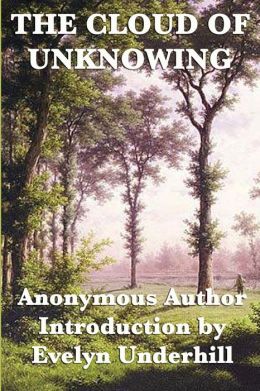
The Cloud of Unknowing (Middle English: The Cloude of Unknowyng) is an anonymous work of Christian mysticism written in Middle English in the latter half of the 14th century. The copy before me is subtitled "A Book of Contemplation the which is called the Cloud of Unknowing, in the which a soul is oned with God." Edited from the British Museum MS. Harl. 674, with an introduction by Evelyn Underhill, 4th edition. It was published in London by John M. Watkins, 1946.

The text, which birthed the idea of 'centering prayer', is a spiritual guide on contemplative prayer in the late Middle Ages. The precise identity of the treatise is unknown, although various individuals were suggested as its author over the years. The debate over who might have penned the original still occupies the academic hunger of many researchers.


The underlying message of this work proposes that the only way to truly "know" God is to abandon all preconceived notions and beliefs or “knowledge” about God. To be courageous enough to surrender your mind and ego to the realm of "unknowingness," at which point, you begin to glimpse the true nature of God.


While some dismissed the work as mere theosis (the entry into deification) or as too similar to transcendental meditation , others focused on its attempt to move the person into a deeper and closer relationship with God.  A mysticism familiar in various periods of Christian history.

8/13/13

The Value of Church History

A Church in Plevna, Ks ca 1920
Many churches are looking at assessment of how well they have done the work of the Gospel.  They have reached a place where they no longer grow and are in decline.  Once vital, active, and focused in their life as a church in their community they have unraveled and questions remain.  A key factor is found in discovering the church history.  When a person goes to a medical doctor they fill out a history form that provides clues to current or future problems.  In the same way, examining the past can provide important information as to what went wrong, when, and what might need to be done in the future to renew, or in some cases, resurrect the church into a vital reproducing centere of spiritual life.

Many denominations have very useful helps for establishing local church archives and keeping the history. The Commission on Archives and History of the UMC published a small booklet just in time for the writing of the 1975 church history.  Significant areas are underscored and the outline of the finished work clearly follows the suggestions of the booklet by Wallace Guy Smeltzer.  

In the introductory remarks he notes: "An accurate, well written history of a local church has real value. It lifts up the achievements, services, and sacrifices of past generations in the church. It inspires pride and loyalty on the part of present church members...It can enhance one's appreciation and love of the church of our Lord which is a "thousand years the same." 

At the time the guide was written the General Conference made the compilation of such a history the responsibility of a local church history committee under the guidance of a local church historian.  The history was to be compiled and then brought up to date each year.

The booklet was divided into subheadings:
First Step
Source Material for the History
Exploring Local Church Sources
Annual Conference and Denominational Sources
Community Sources
Organizing the Material for the History
-Table of contents
-Forward
-Preface by the author or the committee
-Chapter 1 How United Methodism came to (name of community)
-Chapter 2 Our Connectional Relationships
-Chapter 3 The Story of Our Church Property
-Chapter 4 The Story of Our Church Organizations
-Chapter 5  The Record of Our Spiritual Life and Concern
-Chapter 6 The Growth of Our Church and Its Future
-Chapter 7 Our Present Church Organization
-Chapter 8 Our Current Membership Roll
Origin of the Church
-Connectional Relations of the Church
-Church Property
-The Organized Life of the Congregation
-The Spiritual Life of the Church
-The Progress of the Church
-Current Organization
-Membership roll
-Publishing the History

It is interesting to note that in the "Spiritual Life of the Church", the author says "the spiritual vitality of a church is difficult to measure. Some indication of it is provided, however, by evangelistic activities, such as camp meetings in earlier days, revival services, visitation evangelism campaigns, and preparatory class training.  An important indicator is the number of full time Christian workers produced by the church, such as ministers, missionaries, religious education directors or church music leaders....A social conscience of the church can be set forth by recording participation inactions for the causes of temperance, economic justic, civil rights, benevolent controbutions, and charitable relief..."

History, however, is more than mere names, dates and places.  A history should also clearly express the motivations, attitudes, and beliefs of people in a given time or it will be nothing but dry data.  It is the spiritual legacy a church history carries...from generation to generation...telling the marvelous works of God among a people.

For those interested in developing a church archive here are some useful links:
Brunner, Mark.  "Ten Steps in Building a Church Archive." Wisconsin Lutheran Churches.
Gardner, Robert. "How to Start and Maintain a Church Archives".  Southern Baptist.
Bergeron, Jeannette. "Manual for South Carolina Religious Archives and Record Keeping."
Texarkana Museum System. "Guide to Collecting Your Church History". 
United Methodist Archives Center
Insuring the Future of Our Past (some good practical consideration points)

8/12/13

The Method Behind the Means

In 1936, the '2 in 1 Class' (also sometimes the Two in One Class) printed a small booklet of the classConstitution and By-Laws of the Two in One Sunday School School Class of the Wesley M.E. Church, Oklahoma City, Oklahoma. This eight page (6 with text) booklet was approx. 5 inches by 4 inches. It established in Article I the name of the class was to be the "The 2 in 1 Sunday School Class". 


It specified the object or purpose of the class as an organization for the "regular and systematic study of the Bible under competent leadership; the achievement of Christian culture through the spiritual, intellectual, and social development of every member; mutual helpfulness and the extension of Christ's kingdom." The motto for the class was simple and direct: "every member present every Sunday on time with a liberal offering, a studied lesson, and a mind to learn."


The name came from the 'two shall be one' and was made of younger married couples. Some fifty years later they members had aged but the class still met. It finally disbanded in the 1990's. The committee for the booklet was comprised of Virgil A. Alden, H.B. King, and Ellis Margo and the last amended date for this copy was October 30, 1936.

One has to wonder if this type of intentional approach to religious life, merging aspects of both civic awareness of orderly group conduct in a democracy and the Wesleyan model of setting a goal and then meeting that goal through an ongoing process of personal commitment, might not be an important lesson to relearn.  

In the "Me" decade of 'going with the flow' rules, commitment, and accountability fell by the roadside in most of modern society.  That is also a time when churches from many denominations encountered a great 'falling away.'   The WWI and WWII generations in conflict with the Gray Flannel corporate society and their children - who tuned in, turned on and dropped out of nearly everything.  The modern era of social justice replaced sharing the Good News. The social programs replaced the spiritual programs.  Instead of bringing the two together an either/or dichotomy emerged.  The way was lost as the clear purposes, missions, and goals were lost in a forest of conflicting idealogies of equal worth on a stage relative moral direction.

One of the aspects of post-modernism is a return to the origins, to touch once more the source and then make the journey again.  Along the way there is an identification of mistakes and errors in judgement, methodology and practice.  A living form of the old adage "measure twice, cut once."

Maybe it is time to revisit the origins and the source and take measure once more, check the compass and find the true north of spiritual activity and be renewed in mind and functions.

8/9/13

Wesley's Covenant Renewal Prayer


The people called 'methodists' were so labeled due to their belief in approaching the life of faith with a method, a plan, a specific personal goal that reflected the instruction of scripture.


A part of that was an annual 'renewal', what we might call a revival, of this commitment in a prayer used in the litugy.  It was often used at New Year's and is frequently found in churches to this day.  That is very fitting because it was designed to adjust the course, and gracefully urge a return to the true north of relationship and witness for the sake of the Gospel.  It was a reminder to be a people of holy purpose:

I am no longer my own, but thine.
Put me to what thou wilt, rank me with whom thou wilt.
Put me to doing, put me to suffering.
Let me be employed for thee or laid aside for thee,
exalted for thee or brought low for thee.
Let me be full, let me be empty.
Let me have all things, let me have nothing.
I freely and heartily yield all things to thy pleasure and disposal.
And now, O glorious and blessed God, Father, Son and Holy Spirit,
thou art mine, and I am thine.
So be it.
And the covenant which I have made on earth,
let it be ratified in heaven.
Amen.

The Character of a Methodist at UMC Global Ministry.
Some additional resources from Wikipedia:
Image from - From "The Wesleys and Their Times," http://gbgm-umc.org/umhistory/wesley/ , courtesy of the General Board of Global Ministries, The United Methodist Church.

Dr. William Forney Hovis of the Methodist Episcopal Church (1872-1860)

WUMC Archives
William Forney Hovis was born in 1872 in Wesley, Pennsylvania.  He married Aimee Parry in 1902 and pastured in Indiana, Missouri, Wisconsin, Oklahoma, and Minnosota.  He retired in 1938 to devote himself to his writing.  After the death of his first wife he remarried Ina Mosiman and had children Willliam Jr (1914) and Keith (1916). He died in 1960 in Minneapolis, Minnesota.

Hovis published numerous works from an early date in his ministry.  Some titles are:

  • Quality Folks: Practical Meditations (Cincinnati: Jennings and Graham, 1908).
  • My Words: As Reported by Matthew, Mark, Luke, John and Paul. (Cincinnati: Jennings and Graham, 1911).
  • Heart Sonnets. (Boston: R.G. Badger, The Gorham Press, 1913).
  • Poetic Sermons. (NY: Revell, 1932).
  • Consolation. (Indianapolis: Cornelius, 1935).
  • Sin and Salvation: A Study in Origins. (Nashville: Tidings, 1954).
  • A periodical in the 1930's called, The Reveille.
He served as the pastor of Wesley Methodist Church 1925-1928 during a crucial building program that added educational space and a new sanctuary.
Wesley Methodist Church, ca 1930

7/29/13

Another Stirring Poem Used in A Sermon

"We display with pride his cross
In the midst of our pagan life,
While we hug to our hearts the dross
Of our selishness and strife.
What sacrifice have we made
To live the love he prayed?
What wlling blood have we shed
To do the deeds he said?
To be popular and well-fed,
We forsake the way he led,
And follow a ghost instead."


---Vincent Godfrey Burns.  Source Quotable Poems: An Anthology of Modern Verse, volume two. Compiled by Thomas Curtis Clark .  Rev. Fred Mesch used this in a memorial service in 1939 and is found in H.E. Brill's Story of the Methodist Episcopal Church in Oklahoma : Authorized by the Oklahoma Annual Conference, October 22, 1938. (Oklahoma City: The University Press, 1939. pg. 116).

A Stirring Poem

Our Deathless Dead (or, How Shall We Honor Them?)
a longer work dedicated to those who have sacrified for "old glory".

"How shall we honor them, our Deathless Dead?
With strew of laurel and the stately tread?
With blaze of banners brightening overhead?
Nay, not alone these cheaper praises bring:
They will not have this easy honoring. 

How shall we honor them, our Deathless Dead?...
How keep their mighty memories alive?
In him who feels their passion, they survive!"

These words were shared in a memorial service by the Rev. Fred Mesch on October 26, 1939 in Oklahoma City, Oklahoma. It was the occasion of the merger of the Methodist Protestant Church, the Methodist Episcopal Church, South, and the Methodist Episcopal Church, North. A vote of the conference used the inclusion of his stirring words in offical history of the Methodist Episcopal Church, North in Oklahoma by H.E. Brill .

Mesch was  using the poem as a symbol of all the pioneer church workers of the M.E.Church, North lest they be forgotten and their zeal fall by the wayside in the new unified Methodist Church. It was a clarion call back to the ethos and mission of John Wesley and the spiritual fire that consumed previous generations committed to winning the lost and bringing them to Jesus Christ.

The poem often found as annoymous was apparently the work of Edwin Markham (1852-1940) in is found in the book Lincoln & Other Poems in 1901, on page 36.  It was reprinted in the Christian Nation in 1903 (v.38).  This periodical was a collection of sermon stories, illustrations, poems, and similar helps for the church leader.

Words of Merit

"And now, brethern and sisters, co-workers together with me in Christ...Think much, say little, work mightly.  Spend no time in controversy when souls are perishing. Preach salvation, warm, fresh, vigorous and full of love. Live in constant favor with God....let your library consist largely of the Bible, the Dictionary, the Discipline, the Catechism, and the Hymnal book.   Abolish such nonsensical and unscriptural hymns as"We're Going To Heaven Tomorrow", and substitute soul-stirring music, filled with the Bible religion and sense. Think of inviting a sinner to give his heart to Jesus to-morrow, or of being saved to-morrow. No, let us drift back into hymns filled with the Holy Spirit and God will honor us."

---Rev. James Murray, First Session of the Indian Mission Conference, Tulsa, Creek Nation, March 21, 1889 as recorded in H.E. Brill's Story of the Methodist Episcopal Church in Oklahoma : Authorized by the Oklahoma Annual Conference, October 22, 1938. (Oklahoma City: The University Press, 1939. pg. 27.). Emphasis added.

7/8/13

Along Historic Route 66: Wesley UMC, OKC

1940's Wesley Methodist
Historic Route 66 - where you can get your 'kicks' according to an old pop song, is commonly known for the major points along its route from Chicago to Los Angeles. Usually those points are known because of that popular song and just as it says, Oklahoma City is very pretty and in the days of the major use of Route  66 (pre Interstate) travelers would have passed by Wesley United Methodist Church.  The light shining through its stained glass windows in the evening just might have been what was in mind when the city was declared to be pretty.

Wesley Methodist Episcopal Church was organized in the home of Mrs. A.H. Tyler, 1220 NW 29th, on November 10, 1910. In the meeting were the first 28 charter members of the nascent church.  The first pastor was the Rev. F.A. Colwell appointed by Bishop Quayle of the Oklahoma Methodist Episcopal Conference.

The first church location was a simple structure with a sawdust covered floor.  The "Tabernacle", as it was then called, was located at 32nd and Military (32′ x 70′ ). The 1910 Journal of Methodist Episcopal Church, newspapers, and other documents indicate the Conference held at Alva, Oklahoma assigned the first pastor.  In October of 1910,  Frank A. Colwell as appointed pastor and  D. G. Murray was District Superintendent of this district.


In 1911, the congregation moved to NW 25th and Classen and in 1928 dedicated the lovely Gothic sanctuary with its large organ and many stained glass windows. A triangle of land in front of the church was deeded and developed by early Oklahoma pioneer business leader, Anton H. Classen
and his wife.  In 1939, the Methodist Episcopal Church, the Methodist Episcopal, South and the Methodist Protest Church formed a union to become the Methodist Church.  In 1968, the Methodist Church allied with the Evangelical and United Brethern churches to form the new United Methodist Church.


One time mayor of Oklahoma City, Jack S. Wilkes (April 9, 1963 - May 3, 1964)  had served as President of Oklahoma City University from 1957 to 1963. After that, for a year he served as pastor of Wesley Methodist Church. 

"Wilkes ran for Mayor with the backing of the Association for Responsible Government (ARG), an organization promoting efficiency and integrity in City government.  The election was dominated by concerns about metropolitan planning, Urban Renewal and the retention of the Mayor-Council-Manager form of government....During Mayor Wilkes’ time in office, City government became more centralized and citizens passed a sales tax to buttress the City’s finances.   The City’s Airport Trust received a large grant for improvements at Will Rogers World Airport and over $317 million was committed toward City growth.  The City also celebrated the 75th anniversary of the Land Run in 1964.  Mayor Wilkes resigned in May of 1964 to become President of Centenary College in Shreveport, Louisiana." (City of Oklahoma City)

Today, the church is nestled in an area poised to experience a rennaissance in business, residences, and community.  A newly identified "Asian District" highlights the presence and contributions of Asians in Oklahoma City and the Paseo Art District.  Nearby are several historic residential areas: Edgemere and Crown Heights, Gatewood, Military Park, Mesta Park, Heritage Hills.  

Just a block west of Wesley is Oklahoma City University and the two have enjoyed a close relationship since the school relocated to Oklahoma City in 1919 from Guthrie.  The music department at OCU and the music program at Wesley have enjoined a special relationship as Deans of that department and faculty there have frequently served as Music director for Wesley.  The worship arts of music, choir, organ, drama, and speech have been enriched by this tie and Wesley was often viewed as 'university church.'


Links - Additional information about the area of Route 6 can be found at http://mystorical.blogspot.com/2013/06/historic-route-66-in-oklahoma-city.html

5/28/13

Clergy Collars and Robes

The Geneva style

One of the hallmarks of most American evangelical, holiness, and pentecostal groups has been a rejection of many of the rituals, accessories and methods of what they termed the "mainline churches."   These groups were seen as more formal, ritualistic, cold, and dead to spiritual renewal or vitality.  As they left, or where asked to leave, more formal churches using these robes, liturgies and structures, they decried them and their value to the new vital faith they were discovering.

As a result, for most of the 20th century a large majority of evangelicals, holiness and pentecostal groups shunned the wearing of robes, the use of printed liturgies, printed prayers and similar things.  This is ironic considering that as much as they might point to the spiritual dynamic of the rejection of Martin Luther to the cold faith of Catholicism, the use of those robes, those liturgies, and those printed prayers stemmed from the Protestant Reformation.

It was the ministerial rejection of the worship styles of the Catholic church that led to the use of a simple pulpit robe based on the everyday academic wear of many of the reformation leaders.  Instead of the formal, and often highly ornate, vestments (alb, cossack, and stole) the simple "Geneva style black robe" worn in the classroom reflected the everyday garb of the minister.  Instead of the Latin liturgy used in the Catholic Church the worship, prayers, and songs were in the language of the land (Germany, Switzerland, England, etc.).

John Wesley in robe, clerical shirt and Geneva tabs.
The black garb also was used as a anti-clerical fashion choice as England's Queen Elizabeth 1, as head of the Church of England, standardized the vestments of the Church.  The choice of white robes made the obvious rebellious free church choice the black style made popular in Europe and hailing from the area of Geneva.

John Wesley explained the use of the black robe as a means of divesting attention on the one in the pulpit and onto God.   He preached several sermons on the men and women whose entire attention was on adorning themselves to be seen, envied, and admired.  Wesley felt there was simply need for the clergy to disappear so Christ could be made more visible. No distractions to turn the thirsty heart from the living water of Christian faith. No room for vanity, pride, or self in the high calling of the Gospel.

So it ironic in the 20th century to see the minimizing and humble black robe be rejected by another population of those reforming the Christian faith.   It is also ironic to see some of those same groups adopting in their worship some of those same highly ornate, colorful, and expensive vestments their ancestors had rebelled against centuries earlier.

3/10/13

Book By Damon Burrows Reissued


This insightful, practical, and purposeful book, PEOPLE ARE FOR CARING,  originally appeared in 1980.  The author, Damon Burrows, was a man who believed much in the concept behind the title.  His faith was such that he never saw strangers but only potential members of the family of God.  The original description from the book says it all :

"Damon Burrows Is a person-who cares about people. In his individual and group experiences, he has developed a series of practical exercises that teach - "Caring is being like Jesus."

Reverend Burrows is now Evangelism Consultant for the General Department of Evangelism in the Pentecostal Holiness Church. He has been trained to develop specific church growth ministries which has involved over 100 lectures on his "Clinic on Church Healing."

A native of Oklahoma, Damon Burrows has served as an evangelist and pastor for ten years. He is a graduate of Southwestern College in Oklahoma City and has done graduate work at the Nazarene Theological Seminary and Midwestern Theological Seminary in Kansas City. He was a personnel man in the United States Navy for four years which began his 15 years of experience in counseling."

Rev. Burrows went to join his heavenly friends early in 2013.  Urged by many family and friends his family, wife. Marilyn and their two sons, Damon II and David, have reissued this timely and timeless work to continue to bless and inspire others.  To continue the objective made clear through Damon Burrows' life, people are for caring.  It is a splendid book to add to collections of people based outreach, ministry, evangelism, Pentecostal authors, and related subject areas. 

To order click here.

2/23/13

DAMON O. BURROWS (July 2, 1941 - February 23, 2013)

A moment of editorial liberty. For additional information about this Pentecostal Holiness minister click here.

ca. 1985
Damon O. Burrows, minister, evangelist, administor, husband, father, and friend, left this world today to go to a better place and join the many people he cared for, loved, witnessed to, and helped through his years of ministry and leadership.  A Navy veteran, Damon never met a stranger.  He was a friendly, outgoing, and genuinely warm individual whose heart was easily touched and his actions often motivated to act as his Lord would have wanted him to act. 

His heart was always to evangelize, to share the message of Christ, and to bring the joy he experienced to everyone.  He ministered to the homeless, the drunk on the street, the addict, the gang member, the criminal, the lost, the hurting, the young, the old, and the in-betweens.  To Damon there were but two types of people - those who knew the Lord and those who did not.  Anything else was window dressing to that basic concern.   He mingled with CEO's, high ranking individuals, weathly men and women.  He rubbed shoulders with the street person with equal ease and equal love. 

God led him to often make the connections between those in need and those able to help with that need. A matchmaker of miracles he stepped in to help like he knew his Master would have: food, help with bills, prayer, a ride, advice, wisdom, and laughter, always laughter.

His life was a role model of the impact of the love of God on people.  People were always his chief concern, his motivation in life, and his reward.  No one who ever knew Damon O. Burrows can ever forget him and the world is poorer today with his passing.  Those who knew him, however, are enriched.  Like the wake of a might ship on the seas, he leaves a powerful legacy of grace, love, and joy.    For him the words of the sailor's prayer are apt "...  Then are they glad because they are at rest; and so he bringeth them unto the haven where they would be."

Fair seas in heaven, my friend, fair seas. 

1/7/13

An Annotated Bibliography (In Process)


IPHC Books
Classics from Pentecostal Holiness Pens:  A Brief Annotated Bibliography of Significant Early IPHC Works.
[A WORK IN PROGRESS]

Compiled by Marilyn A. Hudson, MLIS (2008)

Most of the early works of the IPHC can be divided into clear classifications of history, sermons, and doctrinal issues (usually an apologetic for the Pentecostal experience of speaking in tongues).

1898-1946

Joseph Campbell in the first book of IPHC history lists several authors and their works in chapter 11, “Books, Booklets, Tracts and Pamphlets in the Pentecostal Holiness Church”. The works covered there were from 1898 to 1946.

Authors listed by Campbell are G.F. Taylor, J.H. King, G.H. Montgomery, Hubert T. Spence, A.E. Robinson, Dan T. Muse, D.D. Freeman, John W. Warren, J.W. Kelley, May Gould Johnson, N.J. Holmes, F.M. Britton, W.M. Hayes, Paul F. Beacham, Mrs. K.E.M. Spooner, Oral Roberts, W.H. Turner, Sarah Nell Beacham, and Joe E. Campbell.

Although an official publishing house had been established in the IPHC in 1918 in Franklin Springs, Georgia, many of the authors published under other companies or self-published using the Franklin Springs facility as press. For that reason, not all the books here carry the "Pentecostal Holiness Publishing House", “Advocate Press” or other label. In this work, the focus will be on books ranging from the 25 page booklet to more significant lengths.

1947-1970

Updating this list for the time period 1947 to 1970 would add  the names of : R.O. Corvin, Blanche King, O.T. Spence, Margaret Muse Oden, Oscar Moore, Charlene West, Florence Hamilton, Noel Brooks,

1970-2010

After 1970 the number of titles of books written by IPHC people would expand. For the time 1970- 2000 titles would include: Frank Tunstall, Noel Brooks, B.E. Underwood, Vinson Synan, J.A. Synan, J.F. Williams, Garnet Pike, Terry Tramel, Robert Rex, Welch, and others

_________________________________________________________________
1. Britton, F.M. Pentecostal Truths. Royston, GA: Pentecostal Holiness Publishing House, 1919. F. Marion Britton was born Jan 21, 1870, five miles below the Indian –Town Presbyterian Church, South Carolina. He was converted at 18 and joined the M.E. Church and began preaching holiness until church rules forbid itinerant evangelistic preaching without permissions. A stay with a local Baptist group was short lived but an encounter with the Fire Baptized Holiness Church proved a better fit. He received the Baptism of the Spirit with initial evidence of speaking in other tongues and on Feb. 7, 1907. He would soon join with the merged FBHC and the PHC. He and his wife were staunch believers in diving healing and rejected the use of drugs. Britton reported a son had died and been returned to life through prayer. She prophesied in church that she would be ‘with Jesus before the next Christmas’ and died in 1903 ‘without drugs.’ Content of the book reveals the issues and questions of early Pentecostal Holiness people: Salvation through the blood; Justification , the birth of the spirit; Is there sin in believers?; Wesley and the Second blessing; Our kind of holiness; Were old testament saints sanctified?; The decision or choice of Moses; Enduement of Power(sic); Sanctification , a second work of grace; Healing as in the atonement; Holiness; Pentecost to the Gentiles; Christian graces; A picture of the last days; the indwelling spirit; The Holy Spirit a person; Ephesian Pentecost; Samaritan Pentecost; The book of 1 Corinthians and out doctrine; Marriage relation and against divorce and remarriage; Prodigal son; A sermon on the resurrection; A brief sketch of my life.


2. Taylor, G.F. The Rainbow. Franklin Springs, GA: Advocate Press, 1924. 223pg.Taylor (1881-1934) had written a small book in 1907, The Spirit and the Bride, and in 1916 a well-received book, The Bride of Christ and followed up the prophetic theme with this work in 1924. In this work he pulled three chapters from the earlier works as he once more explored the concept of the Second Coming of Jesus Christ. Basing the title on the Covenant of Noah he uses the rainbow as a theme that arcs across the book from start to finish. In chapter 1, he presents the rainbow as covenant token and understands the colors may be lessons in themselves of God’s love; it is “prophetic” and “symbolic of God’s glory.” As such, the red symbolizes the blood of Christ, orange the fruit of the spirit, yellow is for the gold of divinity, green is the color of “better things ahead”, blue brings the eyes toward heaven and the promises found there, indigo represents the ongoing cycle of the harvest (spiritual and metaphoric), and finally the violet which he equates with the love of God. Included in the book are discussions and comparisons of pre and post millennialism, the restoration of the Jews, the role of the Jews in the Kingdom, wisdom, antichrists, the role of the Bride of Christ, and many other prophetic themes. George F. Taylor was “editor, author, and agent of religious literature” and was an early leader in the IPHC and was significant in the founding of an early college and the publishing house, both in Franklin Springs, Georgia .


3. Montgomery, G.H. Steps to the Upper Room. Franklin Springs: Publishing House of the Pentecostal Holiness Church, n.d.


4. Spence, Hubert T. The Person, work and witness of the Holy Spirit. Franklin Springs, Ga: Pentecostal Holiness Publishing House, 1944. Spence addressed a dearth in literature by addressing the nature of the Holy Spirit in practical lectures designed for the average person in the church. Spence was born August 27, 1898 in Harnett Co., NC. He was converted in 1920 and received ‘the blessed baptism with the holy spirit” Feb. 17, 1921. His interest in the Holy Spirit as a theological issue arose as he was doing special studies at Union Theological Seminary in 1934. This work contains a set of lessons designed to provide instruction for a solid biblical foundation of understanding about the work and nature of the Holy Spirit. It was also an early and very direct apologetic training manual on behalf of the Pentecostal experience. Included were insightful and thought provoking lesson questions and a unique set of questions “For Our Opponents”. An example is the keenly phrased “if the spiritual gifts and supernatural signs of the first century are not intended for the church of today, when and by whom were they revoked? Give at least one scripture.” The content for this collection of studies: The Holy Spirit a person ; The Holy Spirit, His age in particular; The General work of the Holy Spirit; Work of the Holy Spirit in Particular; Work of the Holy spirit in the church; His personal witness; The Pentecostal witness.


5. Brooks, Noel. Scriptural Holiness. Advocate Press, 1967. 70p. Rooted in the Holiness Movement, the IPHC treasured the teachings of Biblical and cultural holiness as it grew in the post Azusa Street years. Pentecostalism was a global event being experienced in Europe, South America, and Australia from an early day. So in 1954 when Noel Brooks (1914-2007), pastor, scholar, biographer and campaign manager of the early revivalist George Jeffreys, joined the IPHC, an author of academic depth and spirituality enriched the denomination. The book emerged from lectures in the King Memorial Lecture series at Emmanuel. The contents of the lectures addressed: Holiness in the Progress of Revelations -1(Old Testament), Holiness in the Progress of Revelation – II (New Testament), Holiness in the Order of Salvation – I (Sanctification as Process), and Holiness in the Order of Salvation - II (Sanctification as Crisis). Brooks notes in his travel he had seen a great hunger for understanding scriptural holiness and the need for people to move more confidently into that level of devotion to God, yet he also was aware that there are both positive and negative aspects to the search for holiness (legalism and works). Brooks skillfully leads the reader through the Bible to uncover the logical and scriptural holiness that God wants us to live for God. “Our time, our strength, our money, our possessions, our all, continually used up in the service of the Lord” (pg. 67), that, for Noel Brooks encapsulated the purpose and meaning of true “Scriptural Holiness.”


6. Campbell, Joe E. The Pentecostal Holiness Church, 1898-1948: Its backgrounds and history. Franklin Springs: Pentecostal Holiness Publishing House, 1951. Until the publication of this work, the only history of the denomination has been in isolated articles in the national publication, The Advocate, or isolated early works by pioneer preachers. Written as part of his academic work, the book’s purpose was to present ‘complete background material which adequately explains the existence of this organization, also the existence of other kindred Pentecostal and Holiness groups, as an essential and integral part of the local church set-up’. In 573 pages the work does just that as the work is divided into major sections: Divisive Forces Giving Rise to New Sects, The Evolution of Denominations; The Formal History of the P.H.C., Background and early beginnings (this section provides crucial information gained from many of those involved in the early birth of the movement and the denomination), Organized Efforts and Expansion, Departmental Developments, History of Education and Publications. Numerous sub-divisions provide history, context, and a good level of detail. No study of the Pentecostal Holiness Church, or Pentecostalism in general, would be complete without a reading of this significant church history.


7. King, J.H. Passover to Pentecost. Franklin Springs, Ga: Pentecostal Holiness Church Publishing, 19 11, 1914, 1955. 208pg. The beloved first Bishop of the IPHC was a man well regarded for his blend of deep spirituality and profound study. He had left the Methodist Church first due to his commitment to the Holiness doctrine being preached in the late 1800’s. He then moved into Pentecostalism with the same balance of mind and heart and under his capable leadership the denomination emerged as a solid and balanced group. In this foundational work of the IPHC, it is required of all new ministers, King argues the case for a clearly seen line connecting the feast of Pentecost to the descent of the Holy Ghost in Jerusalem.


8. Wicks, Mildred. I Knocked – and the door opened unto me. Newman, Ga: 1940.


9. Turner, W.H. Pioneering in China. 1928.


10. Muse, Dan T. The Song of Songs. Advocate Press,1947. 231pg. Dan T. Muse (1882-1949) was a beloved bishop of the IPHC and one of the first significant leaders to emerge in “the west” in the southern based denomination. A man noted for his humility and gentle spirit, he rose to the rank of Bishop in the church and held a passion of missional work. In the 1920’s he pastored the First Pentecostal Holiness Church of Oklahoma City (a church that had begun as a mission in an old saloon) and quickly grew to become a significant church in the region.  Muse called the Old Testament book, The Song of Solomon, one of the “most sublime love stories ever written.” Although some over church history questioned the presence of such a frank and sensual book in scripture, Muse approached it as a ‘distinctively “latter day book”’ that used allegory and symbol to portray the ‘Heavenly Bridegroom’ and the Bride of Christ. The book is thus interpreted, in the words of C.H. Williams in the introduction, as the “preparation necessary for Christians to…be caught away with Him in the pre-tribulation Rapture…”

Presenting the book in a question and answer manner, Muse, explores key texts and then expands on them, utilizing his vast experiences as pastor, denominational leader, and spirit-filled Christian. The book is enriched by an almost poetic level of description as the author discusses the imagery of the text in light of the nature of the relationship of the Church to Jesus Christ. In many ways the work is infused with one man’s deep love for his Lord. Saturating every page is a reflection of the same eagerness and joy found in the Biblical text. When he ends the book quoting, “Make haste, my beloved,” the reader can sense the soul of a man whispering his dearest and most cherished hope.


For further reading on Bishop Muse see Harold Paul’s From Printer’s Devil to Bishop. Advocate Press, 1976.


11. Underwood, B.T. Gifts of the Spirit. Advocate Press, 1967. Despite the long emphasis in the denomination on the work of the Holy Spirit little had been placed in book form that sought to provide teaching until this small volume appeared.

12. Beacham, Paul F. Meat in due season. Advocate Press, 1954.

13. Roberts, Oral. Healing Waters (serial), 1950.

14. Underwood, B.T. The Spirit’s Sword. Advocate Press, 1969.

15. Robinson, A.E. A Layman and the Book. Washington, 1950. 153 pg. This book by Canadian Robinson (1877-1950) with its emphasis on communicating the meaning of the Bible to the person on the pew, was a rare work in its day and in many ways stands the test of time in its sensible, balanced approach.


16. Stewart, Leon.  Too Late!  [                       ]. This work is considered the first fiction work produced within the Pentecostal Holiness Church.  It covers a fictionalized story of the Rapture.


Resources:

Campell

Synan